
Too Many Healthy Recipes? A Simpler Approach to Healthy Meal Planning
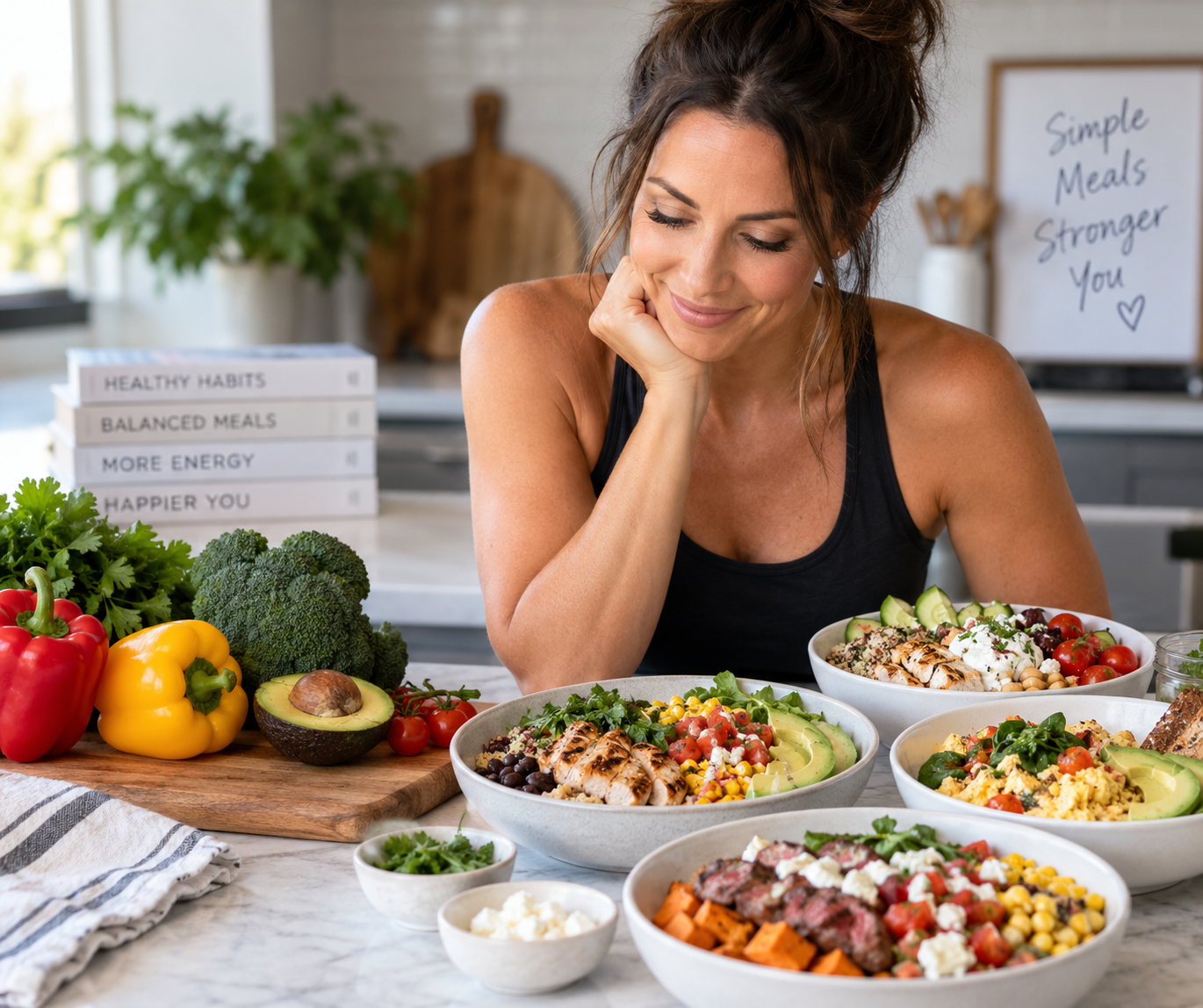
Saving healthy recipes can feel like progress. You find a high-protein dinner on Instagram, send yourself a meal-prep idea from Facebook, bookmark a new bowl recipe, and suddenly you have hundreds of options waiting for you.
Then dinner time comes and you still have no idea what to make.
According to Coach Erin McDonald, that overload may be part of the problem. In this episode of Energy Shift With Erin, Erin explains how endless recipe searching can create more decision fatigue and make healthy meal planning feel far more complicated than it needs to be.
Erin works primarily with women ages 35 to 60 who are navigating changing health, wellness, hormone, energy, and body composition goals. Her approach to meals starts with something much simpler than finding the perfect recipe: build the n
Why Healthy Recipe Overload Can Make Meal Planning Harder
There is no shortage of nutrition information online. That can make it easier to find ideas, but it can also leave women wondering which advice actually applies to their goals.
What should you eat? How much protein do you need? Which foods should you avoid? What should you eat before or after a workout? Which recipe fits your goals?
Erin sees recipe collecting as one way people can feel productive without necessarily making healthy eating easier to implement.
If you have hundreds of recipes saved, each meal can turn into another round of decisions. You have to choose the recipe, buy the ingredients, figure out whether it works with the foods already in your kitchen, and decide whether it supports your protein, fiber, or body composition goals.
Instead, Erin recommends reducing the number of decisions you have to make.
Start Healthy Meal Planning With Protein and Fiber
Rather than beginning with a recipe, Erin starts by asking what the meal needs.
Her basic framework prioritizes:
A protein source
A fiber-rich food
Fruits or vegetables
Healthy fats based on your needs and goals
If thinking about grams of fiber feels overwhelming, Erin suggests making it more practical by focusing on fruits, vegetables, beans, chickpeas, and other legumes.
From there, you can choose the protein already available in your home. Maybe that is chicken, ground beef, shrimp, eggs, turkey sausage, or another protein you enjoy.
Once the foundation is there, the meal does not have to be bland or look like the stereotypical chicken, broccoli, and rice plate. Flavor comes next.
Build the Meal First, Then Choose the Flavor
One of Erin's examples is a homemade Mexican or Southwestern-style bowl.
Instead of searching for a new recipe, you might start with ground beef for protein and black beans for fiber. Then add ingredients such as corn, tomatoes, greens, zucchini, squash, avocado, cheese, or salsa depending on what you have and what fits your preferences.
The same process can work for breakfast.
Erin describes an egg-white scramble bowl with turkey sausage, spinach, tomato, and bell pepper, with options such as beans, whole-grain toast, avocado, or cheese.
The point is not that everyone needs to eat those exact foods. It is that you can build meals from a repeatable structure and adjust the ingredients to suit your tastes.
That can make healthy meal planning much more manageable than starting from scratch every night.
Repeat Ingredients Without Eating the Same Meal Every Day
Repeating meals does not have to mean repeating the exact same flavor.
Erin and her husband often prepare basic ingredients ahead of time, especially proteins and starches. That might include cooked chicken, rice, potatoes, quinoa, lentils, or other ingredients that can be used in several different meals.
Then the flavors change.
Prepared chicken and quinoa can become a Greek-inspired bowl with cucumbers, tomatoes, feta, chickpeas or hummus, and tzatziki.
The same chicken could take on a completely different flavor with salsa, corn, avocado, and Southwestern seasonings.
Another night, those basic ingredients could become a stir-fry.
Instead of preparing seven unrelated recipes with seven completely different ingredient lists, you can keep the foundation familiar and change sauces, seasonings, vegetables, and toppings.
Use Sauces and Seasonings to Keep Simple Meals Interesting
A flexible meal framework does not mean food has to be boring.
Erin suggests looking for sauces and toppings that can quickly shift the flavor of familiar ingredients. Tzatziki, chimichurri, salsa, and homemade Greek-yogurt ranch are a few examples she mentions.
She also shared an example of a sweet potato and steak bowl she had seen that included sweet potatoes, lean steak, grilled corn, cheese, pico de gallo, and a Greek-yogurt-based ranch sauce.
It looked like an exciting recipe, but Erin's takeaway was that the same idea could be recreated using the ingredients and nutritional framework already available.
That mindset can make cooking feel more flexible. You can borrow an idea without needing to follow a completely new recipe every time.
Match the Details to Your Personal Goals
Erin also points out that the proportions and additions can change depending on someone's goals.
For someone focused on fat loss, she recommends being mindful that calorie-dense additions such as oils, avocado, and cheese can add up quickly. Someone with different goals may choose different amounts or combinations.
The larger principle is to understand what is going onto the plate rather than relying on a recipe to make those decisions for you.
Protein, fiber-rich carbohydrates, fruits or vegetables, and fats can be mixed and matched according to your preferences, nutritional needs, and goals.
This gives you a framework instead of another rigid set of rules.
Make Healthy Eating Easier to Repeat
A sustainable routine has to work when you are busy, tired, and not interested in scrolling through dozens of dinner ideas.
That is why Erin encourages women to simplify.
Prep a few useful ingredients. Keep protein options available. Include fiber-rich foods and produce. Choose a flavor profile. Add the sauces, seasonings, or toppings that make the meal enjoyable.
Then repeat the process.
Erin also offers a mix-and-match meal guide built around the same concept, with protein, fiber, carbohydrate, and fat options that can be combined into balanced meals. She invites anyone interested in the guide to message her directly.
You do not necessarily need hundreds of saved recipes to eat well. Sometimes the more useful skill is knowing how to look at the food you already have and turn it into a meal that supports your goals.
🎧 Watch Energy Shift With Erin Conversation 🎧
In the full conversation, Erin McDonald explains how she builds balanced meals without relying on an endless collection of recipes, including examples for breakfast, Mexican-inspired bowls, Greek-style meals, stir-fries, and weekly meal prep.
She also shares how simplifying food decisions can make consistency feel more realistic for women working on energy, wellness, muscle building, or body composition goals.
💜 Connect With Coach Erin McDonald💜
Website: www.8wellnesscollective.com
Facebook: https://www.facebook.com/ErinNichole002
If this conversation could help another woman better understand what may be affecting her hormones and energy, share it with her. 💛
Subscribe to MOMnation USA on YouTube and follow MOMnation Talk Radio so you don't miss future Energy Shift With Erin conversations.
