
Divorce Support for Women: How MOMnation Builds Community 💛
Divorce can leave even capable, resourceful women unsure where to turn. The legal and practical questions matter, but so does something more personal: having a place where you can speak honestly and feel heard.
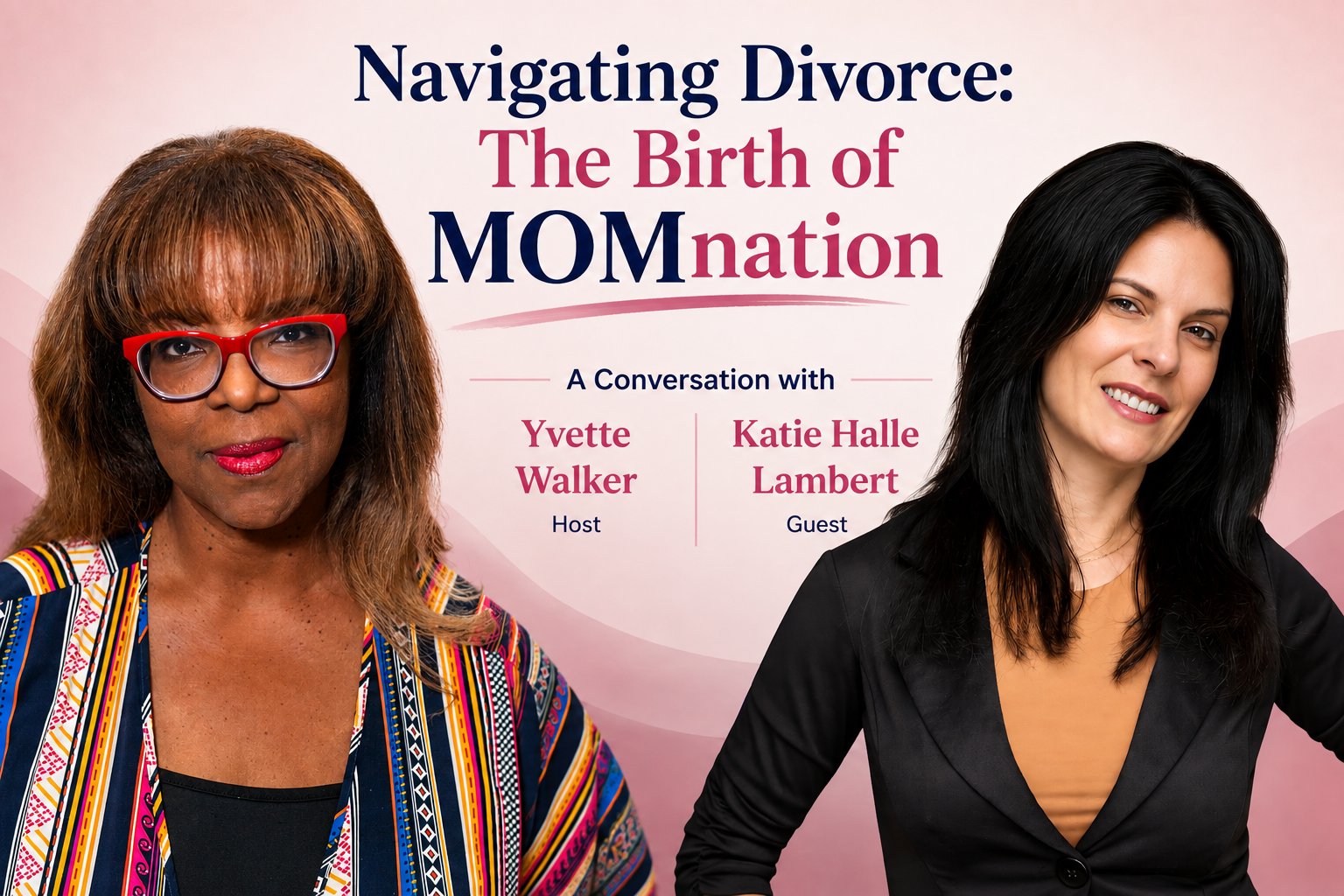
Journalist Yvette Walker of Positively Joy Ministries, LLC, whose work includes Christian divorce recovery, welcomed Katie Halle Lambert as a guest on the faith-based Positively Joy podcast. Katie, founder of MOMnation and co-host of Untying the Knot, joined Yvette to discuss divorce support for women, motherhood, faith, and how the right community can ease isolation during major life transitions.
MOMnation Began With a Need for Connection
Katie described her divorce as one part of the life experience that later shaped MOMnation, but the group itself did not begin as a divorce community. It began after she remarried and became a mother.
Katie and her first husband had married when they were very young. As they grew further into adulthood, they grew apart, and the marriage ended. At that point in her life, motherhood was not something they had planned.
Her feelings about having a child changed after she met her current husband. Katie became pregnant at 35 and quickly realized that many of her friends were either not having children or had already moved beyond the baby years.
She needed women who understood late-night feedings, diaper bags, uncertainty, and the everyday questions that come with caring for a baby. Creating a Facebook group felt like a simple way to find a few friends without having to pack up the entire house every time she wanted to connect with someone.
At the time of the interview, Katie said MOMnation had been active for about 11 years and was approaching 13,000 members. What began as one new mom looking for companionship became a much larger community built around shared experiences and practical help.
Why Divorce Support for Women Must Be Easy to Find
Katie and Yvette both spoke about why finding help can be harder than it seems.
When someone is living with stress, grief, fear, or uncertainty, she may not have access to the same resourceful thinking she relies on during calmer seasons. A phone call or community resource that looks obvious later may not feel obvious in the middle of a crisis.
Mothers may also focus so heavily on their children that their own needs go unaddressed. Supporting children matters, but women also need places where they can ask questions, process what is happening, and receive care.
Katie’s vision was to make MOMnation a kind of one-stop community. Rather than expecting women to search for every answer alone, the group could bring useful conversations, professionals, podcasts, and peer support closer to them.
Untying the Knot Grew From Two Different Divorce Stories
The divorce-specific side of MOMnation developed after Katie met Miranda, who later became her co-host on Untying the Knot.
Their personal experiences were different. Miranda had been divorced twice and had children during those transitions. Katie did not have children during her first divorce, but she could relate to family disruption from the perspective of a child whose parents had divorced.
During a coffee meeting that stretched into a two-hour conversation, they recognized something they had in common: neither had enough people to talk with while going through those experiences.
They decided that speaking openly about their stories could help other women feel less isolated. At the time of the Positively Joy interview, Untying the Knot was airing approximately once a month and had covered personal stories, co-parenting, and parenting time during the holidays. Katie and Miranda were also beginning to welcome more guests with relevant personal and professional experience.
Feeling Seen and Heard Changes the Conversation
For Katie, one of the most meaningful shifts happened when another person made her feel truly seen and heard.
Her circumstances did not instantly disappear, but her confidence and outlook changed. Being acknowledged helped her feel less alone inside what she was carrying.
Yvette agreed that the right community can create that kind of change. They also recognized that not every community is healthy. Some spaces can become overly negative, so the goal is not simply to join any available group.
Healthy support makes room for honesty without trapping women in bitterness or shame. It may come through an online community, a church group, a podcast, or a trusted friend. What matters is having a place where a woman does not need to pretend that she is fine or feel embarrassed because she does not know what to do next.
Faith Should Not Become a Source of Shame
Yvette made it clear that Positively Joy is not a marriage-bashing podcast. Some women remarry, while others do not. Divorce can still leave grief, guilt, and shame regardless of what comes next.
Both women also acknowledged that judgment can surface in faith communities. Katie shared that a faith-based friend once questioned whether supporting women through divorce contradicted her beliefs.
Katie did not believe that caring for people during a major transition was inconsistent with her faith. Yvette similarly shared that after her own divorce, she struggled with feeling unloved and unlovable. Her faith helped her return to the belief that she was still loved.
Their message was not that divorce is easy or ideal. It was that the end of a marriage does not erase a woman’s worth. Faith, compassion, and practical divorce support can exist together.
MOMnation Combines Emotional and Practical Support
The larger MOMnation Arizona community includes familiar mom-group conversations, such as questions about children, family life, and everyday challenges. It also connects women with podcasts and professional resources.
Because the main group’s feed moves quickly, MOMnation created a separate sister divorce community on Facebook. That space makes it easier for women to find divorce-specific discussions without separating them from the broader MOMnation mission.
Katie’s real estate experience adds another practical layer to this work. At the time of the interview, she had worked as an Arizona real estate agent for about two decades and had developed a significant focus on helping divorcing couples.
A home sale connected to divorce is not simply another transaction. It may involve financial uncertainty, difficult communication, family memories, and major decisions about what happens next. Katie’s personal and professional experiences help her understand the context surrounding those decisions.
Service Is the Measure That Matters
Although MOMnation’s growth is meaningful, Katie does not measure success by membership numbers alone.
She explained that if one podcast conversation helps one woman get through her day, see her circumstances differently, or feel supported, then the work has served its purpose.
“I am on this earth to serve,” Katie told Yvette.
In practice, that service means making the next resource easier to find, creating space for difficult conversations, and reminding women that needing support is not a failure.
🎧 Watch the Full Conversation 🎧
Hear Yvette Walker and Katie Halle Lambertdiscuss the personal experiences behind MOMnation and Untying the Knot, the relationship between faith and divorce recovery, and why feeling seen can change the way a woman moves through a difficult season.
💜 Connect With Katie and Yvette💜
Connect with Katie Halle Lambert: https://www.facebook.com/KatieHalleLambert
Connect with Yvette Walker: https://www.facebook.com/yvette.walker.722741
Subscribe to MOMnation USA on YouTube and follow MOMnation Talk Radio so you don't miss future conversations.
